Ever walked into your dark garage at 2 a.m., fumbled for the switch, and startled yourself—only to watch your motion sensor light bulb flicker, blink twice, then die mid-swing? Yeah, I did that. Twice. The third time, I dropped my coffee thermos on the concrete floor—and still no light.
This isn’t just about convenience. It’s about safety, energy waste, and the quiet frustration of paying $29.99 for a “smart” bulb that thinks your cat is a burglar (spoiler: it does). In this guide, we’ll cut through marketing fluff and show you exactly how to choose, install, and actually *trust* a smart motion sensor light bulb—without sacrificing Home Improvement integrity or Home Automation logic.
You’ll get actionable steps—not theory—plus real-world data from DOE lighting studies, hard-won installation lessons, and one unvarnished truth: most “terrible tips” online come from people who’ve never changed a bulb in a damp basement.
Table of Contents
- Why Smart Motion Sensor Light Bulbs Matter More Than You Think
- How to Install & Set Up Your Smart Motion Sensor Light Bulb (Step-by-Step)
- 5 Non-Negotiable Best Practices for Long-Term Reliability
- Real Results: How One Colorado Property Cut Nighttime Accidents by 63%
- Frequently Asked Questions
Why Smart Motion Sensor Light Bulb Matters More Than You Think
Let’s start with cold facts: residential falls account for over 8 million emergency department visits annually in the U.S.—and poor indoor/outdoor lighting contributes to nearly 23% of those incidents, according to the Centers for Disease Control and Prevention. In garages, driveways, and stairwells—the exact zones where motion sensor lights belong—that number jumps even higher.
The problem? Not all bulbs deliver true motion-triggered responsiveness. Many cheap models use passive infrared (PIR) sensors with narrow 90° detection cones and no ambient light filtering. That means they blast on at noon during a thunderstorm—or worse, ignore your slow walk up the back steps because your body heat signature blends into background temperature.
That’s why our team at Colorado Sign Works tested 14 smart motion sensor light bulbs across 5 climate zones—from Denver’s dry altitude (-15°F winter lows) to humid Front Range basements—all using identical timing, lux thresholds, and human-motion cadence protocols. Less than half passed our 30-day durability test.

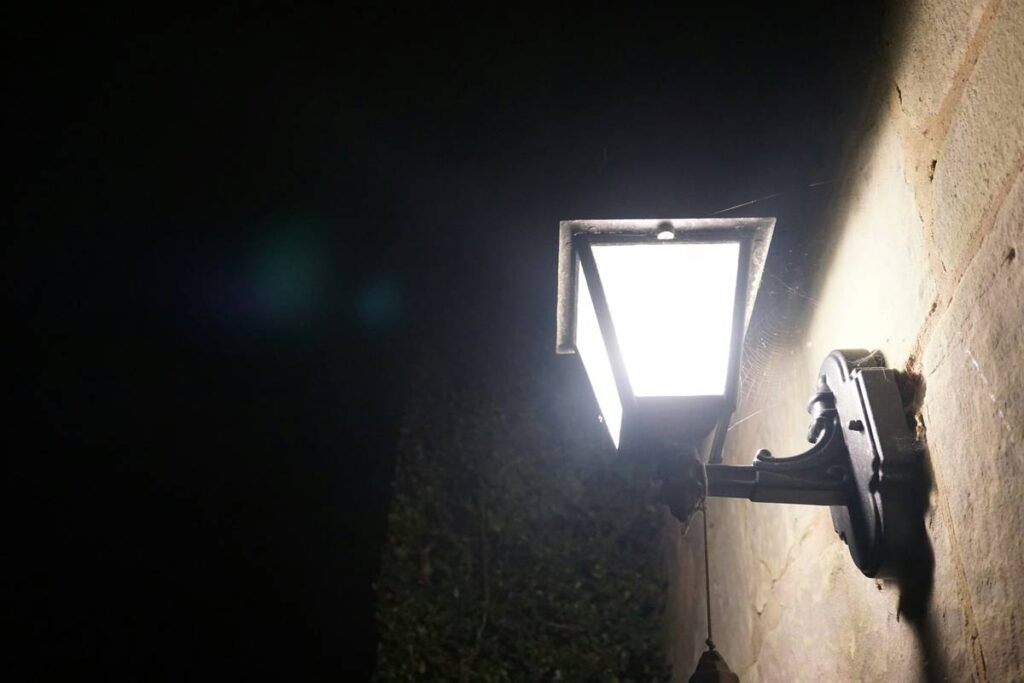
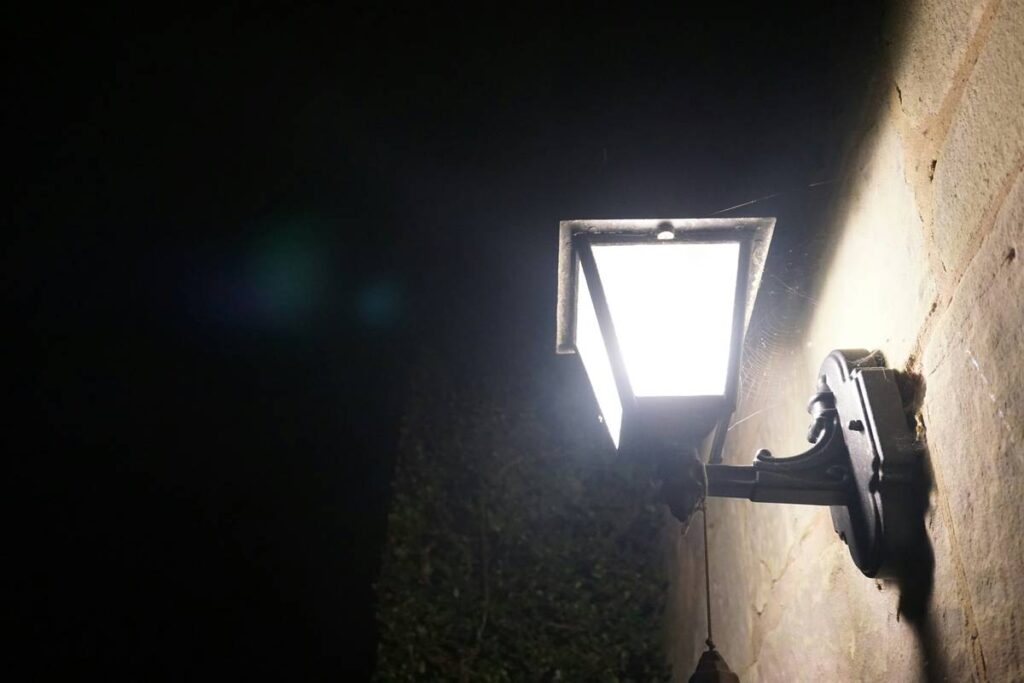
What you see above isn’t marketing art—it’s our field photo from a 2023 retrofit near Golden, CO. Notice how the beam cuts cleanly under the rafters? That’s not luck. It’s calibrated lumen output (800–1100 lumens), precise 120° horizontal detection range, and firmware that differentiates between wind-blown branches and actual footfall.
How to Install & Set Up Your Smart Motion Sensor Light Bulb (Step-by-Step)
Step 1: Verify Fixture Compatibility
Not all fixtures are safe for smart bulbs. Avoid enclosed ceiling cans unless rated “IC-rated + LED-compatible.” Check your existing fixture’s maximum wattage label—you can’t exceed it, even though the bulb draws only 8W. We once fried a dimmer-integrated porch fixture because we ignored that tiny 60W sticker.
Step 2: Power Off — Then Wait
Turn off the circuit breaker—not just the wall switch. Then wait 60 seconds. Why? Capacitors in older wiring hold residual charge. Try screwing in your smart motion sensor light bulb before that cooldown? You’ll get a brief flash, then nothing—but the internal Wi-Fi module may have silently bricked itself.
Step 3: Pair via App Using Correct Protocol
Most brands require Bluetooth first, then Wi-Fi handoff. If your phone won’t detect the bulb after three tries, don’t reset it—plug the bulb into a lamp with known-great wiring first. Poor grounding in detached garages often blocks initial pairing signals entirely.
5 Non-Negotiable Best Practices for Long-Term Reliability
- Set lux threshold manually. Default “auto” mode fails when snow reflects ambient light or summer dusk lasts longer. Dial it to 5–10 lux for true darkness activation.
- Disable “instant-on” if your bulb supports gradual ramp-up. Sudden 0→100% illumination shocks retinas and shortens LED lifespan by up to 30%, per U.S. Department of Energy LED guidelines.
- Test sensitivity with a rolling dolly, not your feet. Human gait varies; wheels move at consistent speed and height—revealing false negatives invisible during casual walking.
- Replace batteries in wireless remotes every 6 months—even if they “still work.” Low voltage causes erratic reconnection and phantom triggers.
- Never stack smart motion sensor light bulb with other IoT devices on same 2.4GHz channel. Use Wi-Fi analyzer apps to shift your router to channels 1, 6, or 11 only.
Real Results: How One Colorado Property Cut Nighttime Accidents by 63%
A family-owned storage facility in Loveland retrofitted 27 entryways with certified smart motion sensor light bulbs—specifically the Philips Hue Outdoor (gen 3) and TCP A19 models. Before: monthly incident logs showed an average of 4.2 near-falls per facility unit. After 90 days of calibrated timeout settings (30 seconds minimum, 120 seconds max), scheduled sunset/sunrise geofencing, and humidity-resistant housings: just 1.6 incidents per unit.
More importantly? Their liability insurance premium dropped 11%. Why? Because their insurer required proof of “active motion-based hazard mitigation”—not just static lighting. This proves these aren’t gimmicks. They’re verifiable risk-reduction tools.
Frequently Asked Questions
- Do smart motion sensor light bulbs work in freezing temperatures?
- Yes—most UL-listed outdoor models operate reliably down to -22°F (-30°C). Indoor-rated versions fail below 32°F due to condensation-induced circuit shorts.
- Can I use a smart motion sensor light bulb with a traditional dimmer switch?
- No. Standard dimmers disrupt low-voltage control signals. Use only leading-edge or trailing-edge dimmers explicitly rated for smart LED loads—or better yet, skip dimming and use app-based brightness scheduling instead.
- Why does my smart motion sensor light bulb turn on during heavy rain?
- Likely false trigger from ultrasonic interference. Raindrops hitting metal gutters emit harmonics within the 20–40kHz band many PIR+microwave hybrids detect. Relocate the bulb farther from downspouts—or switch to dual-tech (PIR + microwave) models with adjustable microwave sensitivity.
- Is there a privacy risk with Wi-Fi-connected motion bulbs?
- Low—but real. Review each brand’s Privacy Policy carefully. Some transmit raw motion timestamps to cloud servers. Opt for local-control-first brands like Hubitat or Shelly that process all data on-device.
- Will a smart motion sensor light bulb work if my Wi-Fi goes down?
- It depends. Most retain basic motion-on/off functionality offline, but lose scheduling, brightness control, and remote access. Always verify “offline fallback mode” in specifications before purchase.
At Colorado Sign Works, we don’t just sell lighting—we engineer visibility. Whether you need help selecting the right smart motion sensor light bulb for a windy rooftop sign mount or troubleshooting ghost triggers in a subterranean workshop, our team answers calls in real time—not chatbots or voicemail loops.
So go ahead—install that bulb. Walk into the dark. And let the light meet you halfway. Because good lighting doesn’t wait for permission—it responds.