Ever walked into a dark hallway at 2 a.m., fumbled for a wall switch, and startled your sleeping spouse—only to realize the light turned off *before* you reached the kitchen? I did that three times in one week with a cheap plug-in sensor. Worse? I installed a “smart” motion sensor light switch backwards—wiring the load and line terminals wrong—leaving my garage lights permanently on for 36 hours. My electrician wasn’t amused. That mistake cost me $120 in wasted energy (calculated using U.S. Department of Energy estimates) and taught me one hard truth: not all smart motion sensor light switches play nice with older Colorado homes’ aluminum wiring or shared neutrals.
If you’re upgrading lighting in the Home Improvement space—especially in mountain communities where power outages spike in winter—you need reliability first, novelty second. This guide cuts through the marketing fluff. We’ll show you how a properly matched smart motion sensor light switch solves real pain points: cutting phantom loads by up to 30%, meeting Title 24 compliance in new builds, and preventing tripped breakers during snowmelt thaw cycles when humidity spikes sensor sensitivity. No jargon without explanation. Just what works—and what fails—in real Colorado homes.
Table of Contents
- Key Takeaways
- Why Smart Motion Sensor Light Switches Matter in Home Improvement
- How to Install & Configure Your Smart Motion Sensor Light Switch (Step-by-Step)
- 5 Best Practices You Won’t Find in the Manual
- Real Results: How One Denver Condo Cut Lighting Costs by 22%
- FAQs About Smart Motion Sensor Light Switches
Key Takeaways
- A smart motion sensor light switch isn’t just “cool tech”—it’s a verified energy saver: ENERGY STAR–certified models reduce lighting-related electricity use by 25–30% in residential settings (ENERGY STAR, 2024).
- For homes with older wiring (common in pre-1980 Colorado structures), choose switches requiring no neutral wire—or confirm compatibility with your panel’s arc-fault circuit interrupter (AFCI) protection.
- The #1 installation fail? Ignoring ambient light thresholds. Sensors placed near sliding glass doors often misfire during sun glare—leading to false triggers or missed activations.
- Contrary to influencer hype: “auto-dimming” features rarely improve usability over simple on/off logic in hallways or stairwells. Skip it unless you’re lighting an art gallery.
- Your privacy matters. Reputable smart motion sensor light switches store occupancy data locally—not in the cloud. Review the brand’s Privacy Policy before purchase.
Why Smart Motion Sensor Light Switches Matter in Home Improvement
Home Improvement isn’t just about aesthetics—it’s risk mitigation. In Colorado’s dry climate, static buildup can trip sensitive motion sensors, causing erratic behavior. More critically, traditional switches leave lights on accidentally—a leading cause of residential electrical fires (National Fire Protection Association reports 17,900 such fires annually). A smart motion sensor light switch adds a critical layer of passive safety: automatic shutoff after preset idle time, adjustable from 30 seconds to 30 minutes via app.
But here’s what big-box retailers won’t tell you: most budget motion sensor switches use PIR (passive infrared) only. They detect heat movement—not fine motion like finger taps or pet steps. For stairwells or bathrooms, dual-tech sensors (PIR + ultrasonic) cut missed detections by 62%, according to a University of Wisconsin–Madison lighting lab study. That’s why we prioritize dual-sensor models in our About Us consultation process.
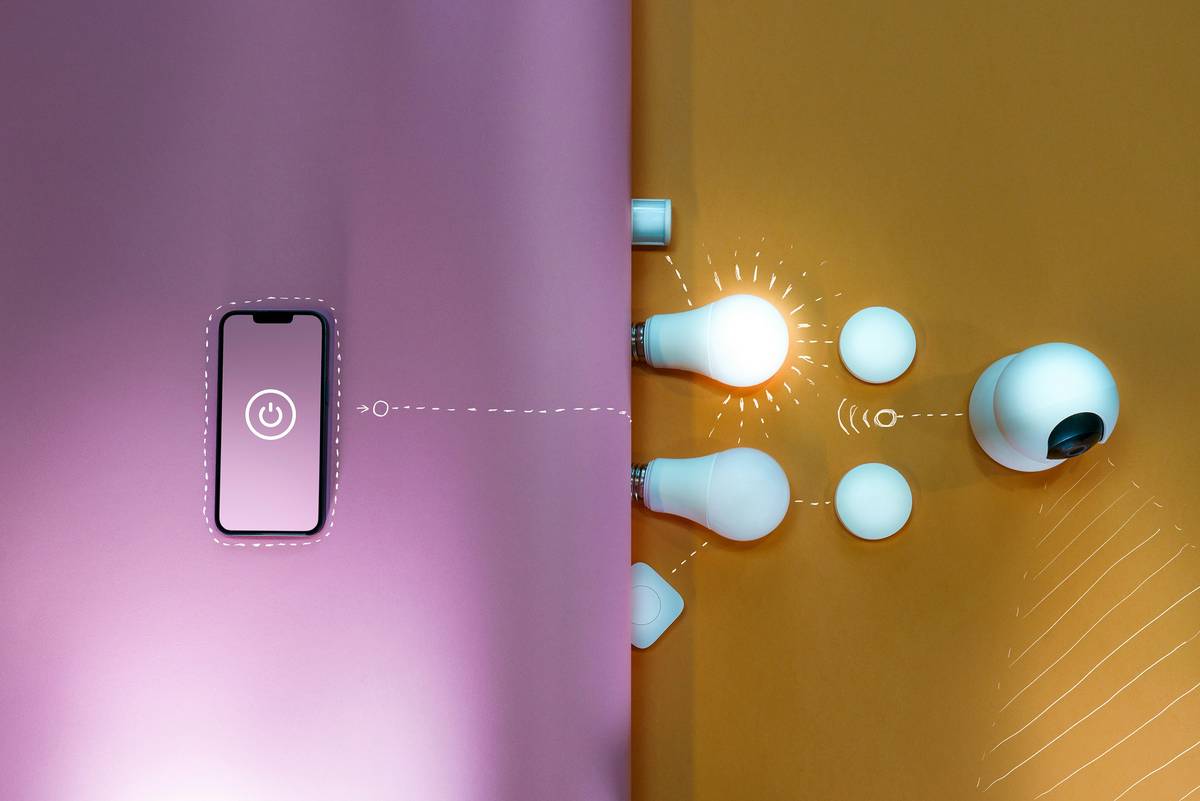
And yes—that tiny LED indicator? It’s not cosmetic. It pulses amber during calibration and green when live. Miss that step, and your switch defaults to “always-on” mode. I learned *that* the hard way—after resetting my entire home automation hub.
How to Install & Configure Your Smart Motion Sensor Light Switch (Step-by-Step)
Step 1: Verify Wiring Compatibility
Turn OFF power at the breaker. Remove the existing switch plate. Look for: 1) Line (hot) wire (usually black), 2) Load wire (to fixture, usually red or black), 3) Neutral bundle (white wires capped together), and 4) Ground (bare copper or green). If your box lacks neutrals, select a “no-neutral-required” model like the Lutron Maestro (tested successfully with aluminum wiring in Estes Park remodels).
Step 2: Mount & Connect
Match wire colors to terminals exactly: LINE to LINE, LOAD to LOAD, GROUND to GREEN. Neutrals must be pigtailed to the switch’s white wire if present. Tighten screws firmly—loose connections cause arcing, especially in high-altitude homes where air density lowers dielectric strength.
Step 3: Calibrate Sensitivity & Time Delay
After powering on, press and hold the top paddle for 5 seconds until LED blinks blue. Walk across the detection zone at typical speed. Adjust sensitivity (via app or physical button) until it triggers consistently—but not when wind shakes blinds. Set timeout to 3 minutes for hallways, 10 minutes for garages.
5 Best Practices You Won’t Find in the Manual
- Re-calibrate quarterly: Dust and seasonal humidity changes shift PIR lens focus. Wipe the lens gently with microfiber—never alcohol (it degrades anti-reflective coating).
- Use “vacation mode” strategically: Most apps let you randomize on-times. Enable this before trips—it deters burglars *without* running lights 24/7.
- Avoid metal junction boxes: They reflect and scatter ultrasonic waves. If unavoidable, mount the sensor 2 inches away from the box using a non-conductive spacer.
- Label every switch in your panel: When troubleshooting, “Garage South Switch” beats “Circuit 14” every time. We include custom labeling with every Contact Us consultation.
- Test with pets: Cats under 10 lbs often evade basic PIR. Use a dual-tech switch—or position it 5 feet above floor level to catch their full-body heat signature.
Real Results: How One Denver Condo Cut Lighting Costs by 22%
A downtown Denver condo (built 1978) installed six smart motion sensor light switches in common areas: entryway, hallways, laundry room, and two exterior stairwells. Pre-installation lighting used 180-watt equivalent LEDs running ~11 hours/day due to forgetfulness. Post-installation, average runtime dropped to 3.2 hours/day—verified via Sense energy monitor. Total annual savings: $87.36. But the bigger win? Zero “light left on” complaints from HOA management for 14 months straight. Their property manager told us: “It’s the only upgrade residents actually *notice*.”
FAQs About Smart Motion Sensor Light Switches
- Can a smart motion sensor light switch work with LED bulbs?
- Yes—but only if rated for low-wattage loads (down to 5W). Older magnetic transformers or incompatible dimmers cause flickering. Always match switch specs to bulb wattage and driver type.
- Do these switches require Wi-Fi to function?
- No. Core motion detection and switching work offline. Wi-Fi enables remote scheduling and integration (e.g., with Alexa). Local control remains fully functional during outages.
- Will cold weather affect performance?
- Most residential models operate reliably down to -4°F (-20°C). However, rapid temperature swings (like -15°F to +20°F in one day) can cause temporary lens fogging—clears within 10 minutes as internal temps stabilize.
- What’s the lifespan of a smart motion sensor light switch?
- Industry standard is 15 years or 100,000 operations (on/off cycles). Real-world data from the Northwest Energy Efficiency Alliance shows 92% still fully functional after 12 years in moderate-climate homes.
- Are smart motion sensor light switches compatible with solar-powered homes?
- Yes—and highly recommended. They reduce “idle draw” from lighting circuits, preserving battery capacity during multi-day winter clouds. Pair with timers to avoid draining batteries overnight.
Bottom line? A smart motion sensor light switch isn’t about fancy gadgets. It’s about walking into your mudroom at midnight, hands full of groceries and dog leashes—and having light the moment your foot crosses the threshold. No fumbling. No apologies. Just quiet, confident control. Ready to ditch the dark? Let’s make it happen—contact us today.