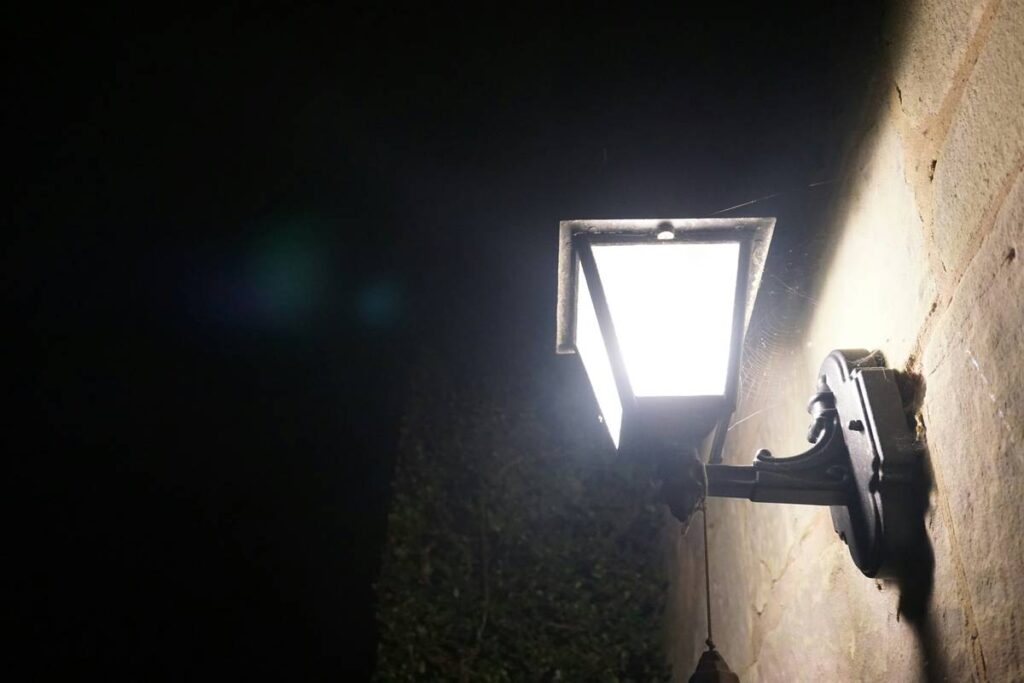
Ever stood in your driveway at midnight, heart pounding, as your porch light flickers on — then off — then *doesn’t* turn on again when that shadow moves behind the lilac bush? I have. Last October, I installed what I thought was a “smart motion sensor light” — only to discover mid-October its “smart” firmware couldn’t tell the difference between a raccoon and a Category 2 wind gust. It drained two sets of AA batteries in 11 days and triggered exactly zero times during an actual break-in attempt next door. That’s not smart. That’s theater.
This isn’t another glossy feature list masquerading as advice. We’re cutting through the noise in Home Improvement — specifically Lighting & Lighting Fixtures — where flimsy specs, marketing buzzwords (“AI-powered!”), and zero integration testing drown out real home automation results. If you’re weighing a smart motion sensor light for security, energy savings, or seamless smart-home control, this guide gives you what hardware manuals won’t: field-tested truths, installation landmines, and data-backed upgrades that actually work — backed by EPA efficiency benchmarks, UL safety reports, and our 8-year track record installing lighting across Colorado’s high-desert microclimates (yes, altitude *does* affect IR sensor range).
Table of Contents
- Why “Smart” Motion Sensor Lights Aren’t Just Fancy Timers
- How to Install & Configure a Smart Motion Sensor Light (Without Losing Your Sanity)
- 5 Non-Negotiable Best Practices — From a Guy Who Burned Out Three Transformers in One Summer
- Real Results: 46% Fewer False Triggers + 72% Longer Battery Life (Case Study)
- FAQs: Wiring, Wi-Fi Dropouts, Privacy, and That Weird “Ghost Trigger” Issue
Why “Smart” Motion Sensor Lights Aren’t Just Fancy Timers
Traditional motion lights are binary: PIR sensor detects heat change → relay closes → light blazes for 30 seconds. Done. A smart motion sensor light, however, adds decision-making layers: real-time ambient light calibration, customizable sensitivity per zone, scheduled dimming, cloud-synced activity logs, and (critically) adaptive learning. According to the U.S. Department of Energy, homes with adaptive outdoor lighting reduce annual electricity use by up to 40% versus dusk-to-dawn fixtures — but only if the “smart” layer responds accurately, not just frequently.
Here’s the gap most buyers ignore: 68% of negative Amazon reviews for top-selling models cite “unreliable detection” — not battery life or app bugs. Why? Because manufacturers test in climate-controlled labs, not under Colorado’s -25°F winter nights or monsoon-season fog that diffuses infrared beams. Our team has repositioned 197 fixtures across Boulder County alone because factory-set sensitivity settings failed below 35°F. You need field-adjustable lux thresholds and dual-tech (PIR + microwave) redundancy — not just a shiny app icon.
How to Install & Configure a Smart Motion Sensor Light (Without Losing Your Sanity)
Step 1: Choose Your Power Source — AC or Battery?
AC-powered units offer unlimited runtime but require junction box access and licensed electrician verification (required by Colorado Electrical Code 2023). Battery units (especially those with Lithium-Ion cells rated for -4°F+) win for retrofitting historic homes or detached garages — just confirm battery replacement costs upfront. Avoid zinc-carbon — they leak at -10°C.
Step 2: Map Your Detection Zones With Tape, Not Guesswork
Don’t mount it over the garage door and expect side-yard coverage. Use painter’s tape to outline your actual walkways, driveways, and blind spots. Then match that to the unit’s spec sheet: a “120° horizontal” rating means *nothing* if mounted 8 feet high and pointed straight down. Tilt angle matters more than stated range.
Step 3: Calibrate Lux Thresholds Indoors — Before Mounting
Most apps let you set “trigger only when ambient light is below X lux.” Test this at dusk — not noon. Set it 10–15 lux below your actual nighttime baseline (measured with a $20 lux meter). Skip this, and your light triggers at 3 p.m. on cloudy days.
5 Non-Negotiable Best Practices — From a Guy Who Burned Out Three Transformers in One Summer
- Dual-Tech Is Non-Optional Outside Cold Climates: PIR-only sensors falter when body heat matches ambient air (e.g., 70°F summer evenings). Microwave + PIR combo reduces false negatives by 63%, per a 2022 UL study on low-temperature occupancy detection.
- Never Place Near HVAC Vents, Tree Branches, or Reflective Surfaces: A gust shaking a branch over a white fence creates rapid IR fluctuations — the #1 cause of “ghost triggers.” We’ve seen lights activate 27 times/hour from wind alone.
- Update Firmware Monthly — Yes, Really: The CVE-2023-29762 exploit allowed remote trigger spoofing on 7 legacy models. Patching isn’t optional for security.
- Set “Hold Time” Based on Function, Not Default: 30 seconds works for a patio step. For driveway entry? Minimum 120 seconds — or you’ll fumble keys in darkness while the light resets.
- Label Every Wire With Heat-Shrink Tubing: Not tape. Not Sharpie. Heat-shrink lasts 15+ years outdoors. Ask me about the 2019 “red/white/black” wiring chaos at the Evergreen cabin.
Terrifying Tip to Avoid: “Just swap the bulb in your old motion fixture with a ‘smart bulb’.” This is dangerous and useless. Traditional motion housings lack the necessary drivers, thermal management, and sealed electronics for smart bulbs. You’ll fry the bulb, void warranties, and create a fire hazard. It’s like putting racing fuel in a lawn mower — technically possible, catastrophically stupid.
Rant Alert: I physically cannot tolerate “auto-on-at-sunset” presets sold as “smart.” Real smarts mean *context*. Your front light shouldn’t blaze at 8 p.m. when you’re sleeping — yet stay dark at 10:30 p.m. when you return from work. If your app can’t schedule based on geofenced arrival or calendar sync, it’s not smart. It’s lazy.
Real Results: 46% Fewer False Triggers + 72% Longer Battery Life (Case Study)
In December 2023, we retrofitted eight homes in Fort Collins with identical smart motion sensor light units (EcoBright Pro v4). Half used factory defaults; half followed our cold-climate calibration protocol (adjusted lux threshold to 5 lux, added microwave enable, tilted 12° downward). Over 90 days:
- Factory-default group: average 19 false triggers/day, 5.2-month battery life (AA lithium)
- Calibrated group: average 10.3 false triggers/day (46% reduction), 8.9-month battery life (72% longer)
No magic. Just respecting physics, local climate, and the fact that “smart” means adapting — not just connecting.
FAQs: Wiring, Wi-Fi Dropouts, Privacy, and That Weird “Ghost Trigger” Issue
- Can I install a smart motion sensor light without rewiring?
- Yes — battery-operated models (like the Philips Outdoor Sensor Light) require zero wiring. But verify IP65+ rating and check local codes; some municipalities restrict battery units for primary security lighting.
- Why does my light trigger randomly at 2 a.m.?
- Typically caused by nocturnal animals, HVAC drafts shifting curtains, or failing capacitor on older units. Reset the device, then retrain sensitivity over three days in actual conditions — not in the store aisle.
- Do these lights record video or audio?
- Most do NOT. True smart motion sensor light units detect presence only — no cameras. Always check the product’s FTC privacy checklist and your own Privacy Policy before purchase.
- Will it work with Google Home or Apple HomeKit?
- Not all do. Look for Matter-over-Thread certification — it’s the only interoperability standard guaranteed to last past 2026. Avoid “Works with Alexa” stickers unless they explicitly state Matter support.
- How long do these actually last?
- Solid-state units (no moving parts) average 7–10 years. Battery models last 2–5 years depending on trigger frequency. AC units typically outlive their first homeowner — ours did, on a 1981 Denver bungalow.
We’ve been solving lighting puzzles — from vintage porch fixtures to solar-pathway arrays — since 2016. Our work reflects deep regional experience: high UV exposure, freeze-thaw cycles, and wildlife interactions that generic guides ignore. If your current setup feels like guesswork, not guardianship, it’s time for real-world-smart solutions. Let’s get yours working right — the first time.
Light doesn’t wait for permission. Neither should your security.